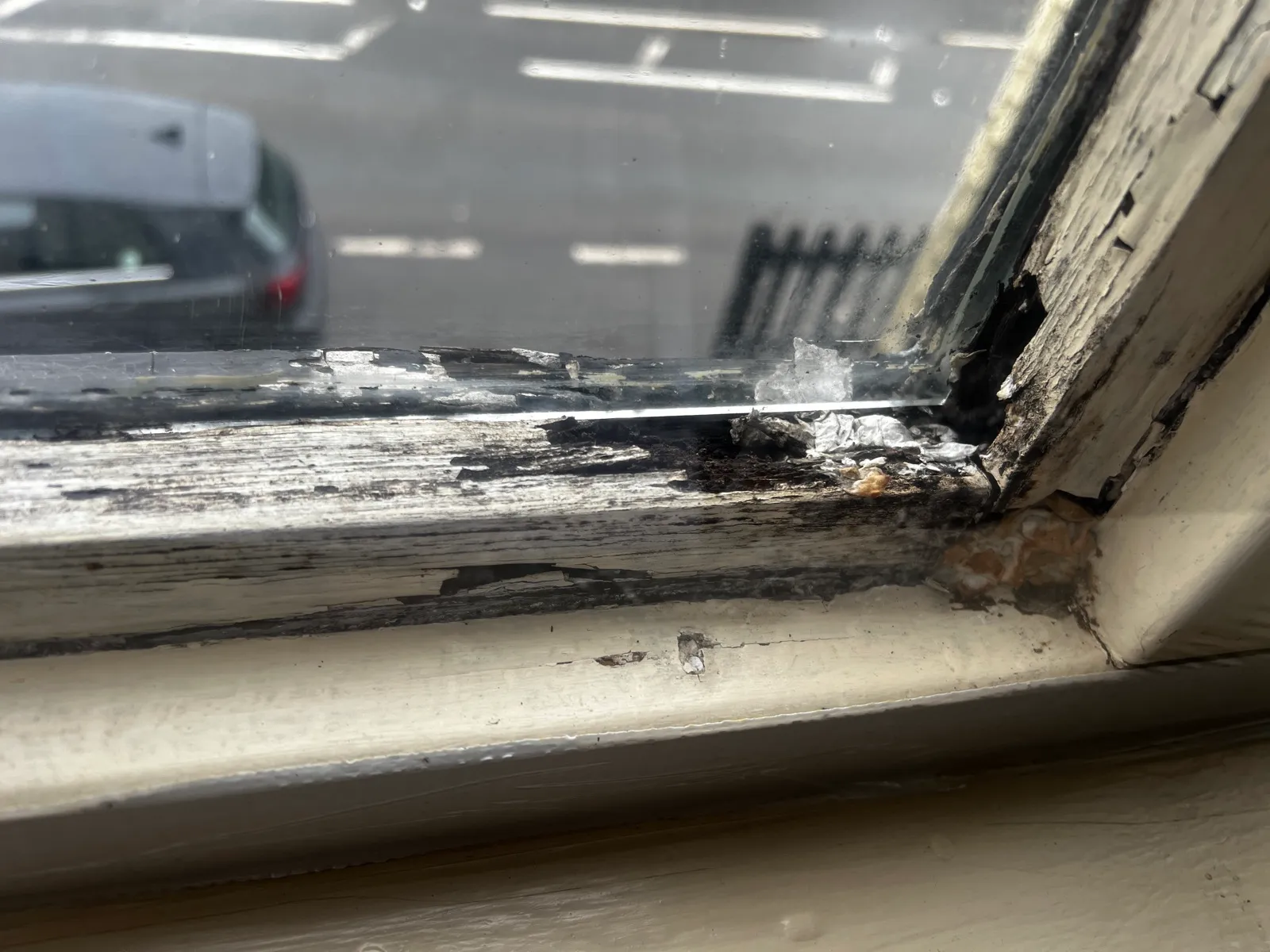
Almost every homeowner with a rotten wooden window assumes the damage came from outside — rain, weather, exposure. So the conversation usually goes “this side faces south-west, that’s why it’s gone.” For about half of all wooden window rot we see in Hertfordshire, that’s correct.
For the other half, the rot started on the inside.
The window in the photo above is a textbook example. The damage is concentrated at the bottom corner where the lower sash meets the meeting rail. The timber is pulpy and blackened. The original putty has failed. There’s a piece of foil tape covering the gap between glass and timber — an emergency fix from a previous owner. Look at the angle of the photo: this damage is on the interior side of the window. No rain ever reached it directly.
So what caused it? Condensation. Specifically, twenty winters of condensation pooling overnight on cold single-glazed glass, running down the pane and sitting in the corner where it meets the timber. Once water reaches bare wood (which happens the moment the original paint or putty fails), rot begins. The cycle repeats every November to March. Eventually you get this.
The science (briefly)
Warm indoor air holds more water vapour than cold air. Single-glazed glass in winter is cold — often only 1–3°C above the outdoor temperature, which means single-digit Celsius surface temperatures even in a heated room.
When warm humid indoor air (kitchens, bathrooms, bedrooms with people breathing all night) hits that cold glass, the water vapour condenses out of the air and onto the glass as liquid water. You see this every winter morning — the streaks running down your bedroom window. By the time you wake up there’s often a small puddle along the bottom edge of each pane.
That puddle has to go somewhere. It either:
- Wicks into the bottom rail of the sash through any failed putty, paint crack or timber-to-glass gap.
- Runs along the bottom horizontal until it finds the corner where the sash meets the frame, where it pools and sits.
- Drips onto the sill below, where it runs into any joint or split in the paintwork and starts the same process on the sill itself.
Wood absorbs water through capillary action. Once the moisture content of the timber crosses ~22% (it’s around 12–14% in a normally-heated room), wet rot fungi can start to grow. They digest the cellulose in the wood, the timber softens, the rot expands.
After a few winters of this you get the photo above.
Where to look on your own windows
Five places to check on the interior side:
- The bottom corners of each sash — especially the lower sash, especially the corner away from the catch. Tap the timber with a screwdriver. If it’s soft or the screwdriver pushes in, you’ve got rot.
- The meeting rail (where upper and lower sashes overlap) — the lower edge of the upper sash often shows water staining and softening here.
- The internal sill / window board — look for staining, peeling paint, or a slightly soft feel at the front edge where it meets the lower sash.
- The putty around each pane — check it’s still continuous, smooth and intact. Cracks, gaps and missing chunks are how water gets in.
- The bottom of the frame jambs — rot creeps sideways from the corner of the sash into the frame itself.
Don’t be misled by paintwork that looks fine. Modern paints flex and can hide significant rot underneath them — the sill in the photo looks decent at a glance until you notice the timber under the foil patch is fully gone.
The fix: slim vacuum-sealed double glazing
Here’s the key insight that most homeowners miss: you don’t have to keep replacing rotten timber every decade. Once you address the cause of the condensation, the timber stays dry and the rot doesn’t come back.
The cause of condensation is simple: cold glass surface. Fix that, and the entire chain of damage stops.
That’s why we recommend slim vacuum-sealed double glazing retrofit for any property where interior condensation has been a recurring problem. Here’s why it works:
Inner pane stays warm. A vacuum-sealed double-glazing unit at 6.7mm thick has a U-value around 1.0 W/m²K, compared to 5.8 for single glazing. In practical terms that means the inner glass surface stays 8–12°C warmer in winter conditions. Often warm enough that the room’s dew point never gets reached at the glass surface — no condensation forms in the first place.
Original frames preserved. The slim profile (6.7mm vs 24mm+ for traditional double-glazing units) fits in the existing rebate of most Victorian and Edwardian sash windows. We retain your original timber frames, original sightlines, and (where possible) original glazing bars. From the outside, the window looks identical — period purists can’t tell the difference.
Listed Building friendly. Because we’re not increasing the rebate depth or changing the visible frame profile, this approach satisfies most Listed Building Consents and conservation area planning controls. Most local authorities prefer slim retrofit to wholesale window replacement for heritage properties.
Acoustic bonus. The vacuum gap is excellent for noise reduction too. Properties on busy roads (like the one in the photo, looking out at parked cars on a street) typically see a 5–8 dB reduction in road noise after retrofit — a noticeable difference inside the house.
When the rot is too far gone to save
The photo above is on the edge of what we can save with timber repair. The lower meeting rail itself is so damaged it’ll need to be cut back, spliced with Accoya®, and re-finished. The upper part of the sash and the surrounding frame can usually be retained.
Our typical sequence for a window in this state:
- Assess the rot extent — how deep, how wide, is the structural integrity of the sash compromised?
- Cut out and splice — rotten timber removed back to sound wood, replaced with Accoya sections that won’t rot again.
- Treat surrounding timber with borate preservative to kill any remaining fungal spores.
- Retrofit slim vacuum-sealed double glazing — this is the part that breaks the cycle. The newly repaired timber will stay dry because the new glazing won’t condense.
- Full strip, prime and paint with a continuous, water-tight finish.
- Re-bed and re-putty with traditional linseed putty or modern silicone-bedded glazing as appropriate.
Done properly, the repaired window will outlast the rest of the house — the upgraded timber is more durable than the original, and the upgraded glazing means no water reaches it.
Don’t keep papering over the symptoms
If you’ve patched the same spot on your sash window twice already, don’t patch it a third time. The patches don’t address the cause — they’re just delaying the inevitable. Each cycle of rot eats deeper into the structural timber until eventually the frame itself is compromised and the cost of full replacement starts looking unavoidable.
The point at which to switch from “patch and hope” to “fix the underlying cause” is usually when you notice the rot returning in the same place within a few winters. Slim double glazing typically pays for itself within 5–10 years through avoided timber repair costs alone, before you even count the heating savings or the comfort benefits.
For more on assessing rot generally, see our blog: rotten sash windows: replace or restore? For the related issue of rot caused by leaks from above, see how a leaky roofline causes rot in bay windows.
If your sash windows show signs of interior rot — or you’re tired of wiping condensation off the inside of the glass every morning — get in touch for a free assessment, or call 01727 638 999. We cover Hertford, St. Albans, Watford, Harpenden and the rest of Hertfordshire.