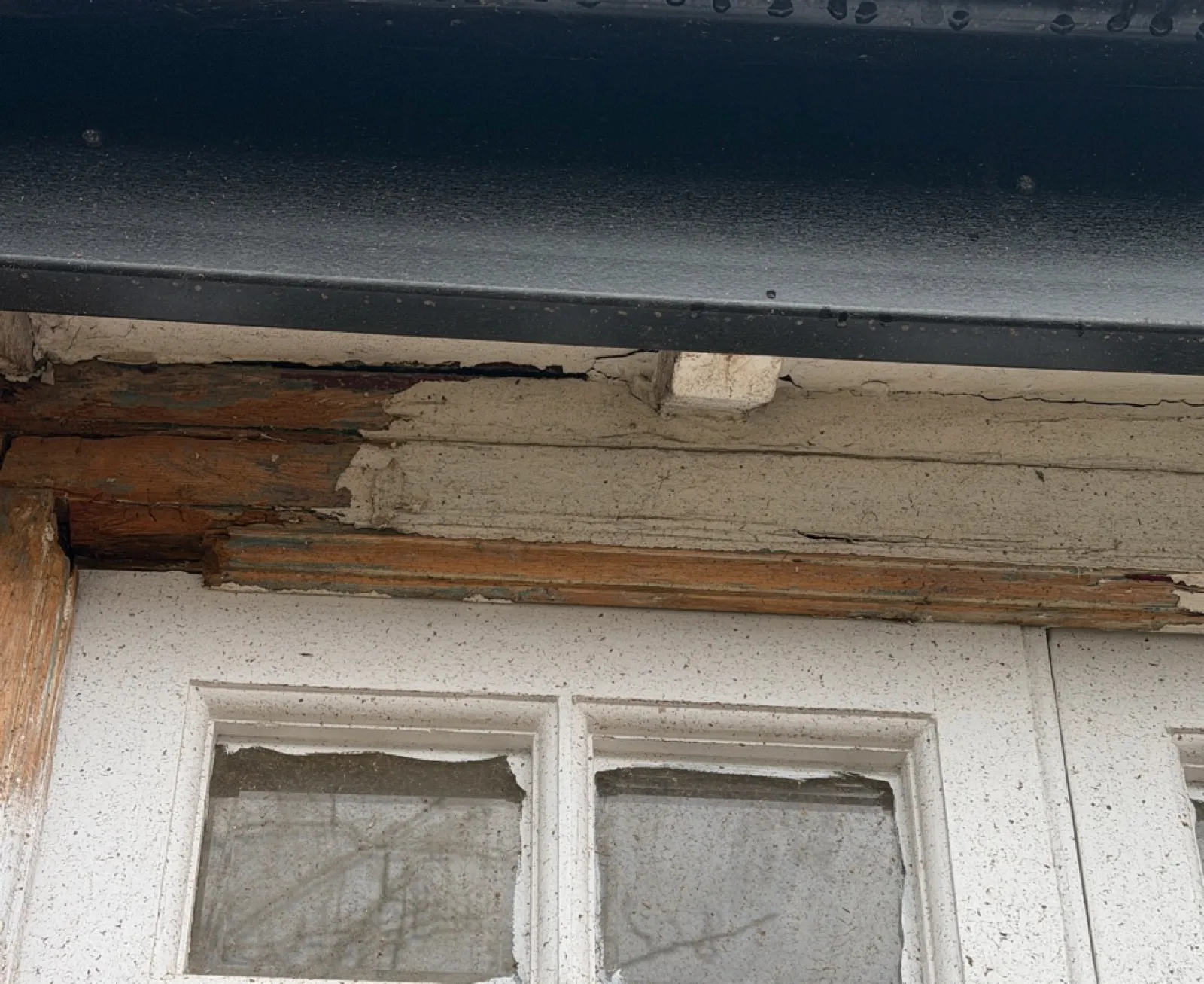
The timber in the photo above is a textbook case of bay window rot — and it’s also a textbook case of bay window rot caused by a problem that has nothing to do with the bay window itself.
Look closely. The rot is concentrated at the top of the timber, immediately under the lead flashing and the painted black gutter. The wood underneath is still painted and intact. The damage is running horizontally along the join between the bay roof and the timber head — exactly where you’d expect water to track if the lead above were lifting or the flashing were failing.
This pattern is everywhere on Victorian and Edwardian bay windows. Homeowners notice the peeling paint, push a screwdriver into the soft timber, and assume the wood needs replacing. They get a quote for sill or lintel replacement and start asking around. What very few people do — including, frankly, plenty of contractors — is look up at the roof first.
If you don’t fix the roof, the new timber will rot in three to five years. Guaranteed.
Why bay windows are particularly vulnerable
Bay windows project out from the main wall of the house, which means they have their own little roof — typically a small lead-covered “bay roof” or “cheek” pitched outwards, with lead flashing where it meets the main wall above. They also usually have their own mini-gutter or just direct shedding to the ground.
That little roof is the problem. It’s a high-maintenance bit of building fabric that sees a lot of weather, gets minimal attention, and fails in subtle ways:
- Lead flashing lifts at the join with the wall, often only millimetres, but enough to wick water in by capillary action.
- Bay roof lead splits along old fold lines as it expands and contracts in summer/winter cycles.
- Pointing fails between the flashing and the brick or render.
- Mini-gutters block with leaves, moss and debris, and water sheets sideways onto the timber instead of draining.
- Painted black metal gutters (like the one in the photo) develop pinholes from the inside out and drip directly onto the timber head below.
In every case the symptom is the same: water finds its way onto the timber lintel, head, or top rail of the bay window. Once it’s there, it sits, soaks in, and rots the wood from the back of the paint film inwards. By the time the paint blisters and falls off, the timber underneath is already pulpy.
How to tell if your bay window rot is roof-caused
Five quick checks before you pay anyone to repair the timber:
- Where is the rot concentrated? Top of the bay window (under the bay roof and flashing) → almost certainly roof-caused. Bottom of the bay (around the sill) → could be either roof above OR sill failure below. See our guide on sill replacement for the latter.
- Is the damage horizontal? A long horizontal stripe of failure (like the photo) is a tell-tale water-tracking pattern from above. Localised round patches are more likely to be timber-specific issues.
- Look up. Is the lead flashing flat against the wall and pointed in cleanly? Or is there a visible gap, lift, or split? Use a torch in the morning when the sun’s at the right angle.
- Wait for rain. Watch the bay window during a heavy shower. If you see water tracking down the wall above the bay, or dripping from the gutter onto the timber, you’ve found the leak.
- Check inside. Damp staining on the inside of the bay (top corners, ceiling above) is a strong indicator water is reaching the lintel from above.
If even one of these points to the roof, fix the roof first.
What “fix the roof first” actually means
For most Hertfordshire bay windows, the fix is one of three things:
- Re-dress the lead flashing where it meets the wall — pulling it tight, re-pointing into the brick joint with lead-friendly mortar or sealant. Few hundred pounds of roofer’s time.
- Patch or replace lead on the bay roof itself — bigger job, but still cheaper than letting it ruin the woodwork.
- Repair or replace the gutter / drainage — clear blockages, fix pinholes, re-secure to the fascia.
Get a competent roofer or leadworker out before you touch the timber. Make sure the upstream water is going where it’s meant to. Then, and only then, repair the rot.
Then — and only then — repair the timber
Once the roof is right and the timber has had a few weeks to dry out properly, the rot itself is repairable using the same approach we’d use for any other wooden window damage:
- Cut out the soft timber back to sound, dry wood. Don’t be tempted to fill over softened wood — it’ll come back.
- Treat the surrounding timber with a borate-based wood preservative to kill any remaining fungal spores.
- Splice in Accoya® replacement sections matched to the original profile — Accoya won’t rot again even if the upstream leak comes back.
- Prime properly with an oil-based exterior primer that flexes with timber movement.
- Two top coats of premium exterior paint, ideally sprayed for an even film build. See our window painting service for the same prep and finish standard.
Done this way, and assuming the roof remains watertight, the repaired timber should last 30+ years.
A common (expensive) mistake
The mistake we see again and again: homeowner notices peeling paint and soft timber on the bay, gets a contractor in to “fix the rot”, contractor obliges with epoxy filler and a coat of paint, the bay looks great for one season, and the rot returns the following winter. Two years later the homeowner is back to square one — except now they’re £800 down and the underlying leak has done another year of damage to the structural timber.
If you’re getting quotes for bay window restoration, ask the contractor specifically: have you checked the roof above? What’s the upstream cause of the rot? A good answer mentions lead flashing, gutters, or pointing. A bad answer is just a quote for woodwork.
When in doubt, call us out
We assess every project for upstream water issues before we quote a timber repair. If the cause is roof-related, we’ll tell you straight and recommend a roofer (we work with several reliable Hertfordshire firms). It costs us a job in the short term, but it means our timber repairs actually last — and that’s the only kind of work we want our name on.
For more on diagnosing rot generally, see our blog post on rotten sash windows: replace or restore?, or read about our sill replacement service and door repair work where the same upstream-cause-first principle applies.
Need a free assessment of bay window rot? Get in touch or call us on 01727 638 999. We cover all of Hertfordshire including Hertford, St. Albans, Watford, Harpenden and surrounding areas.